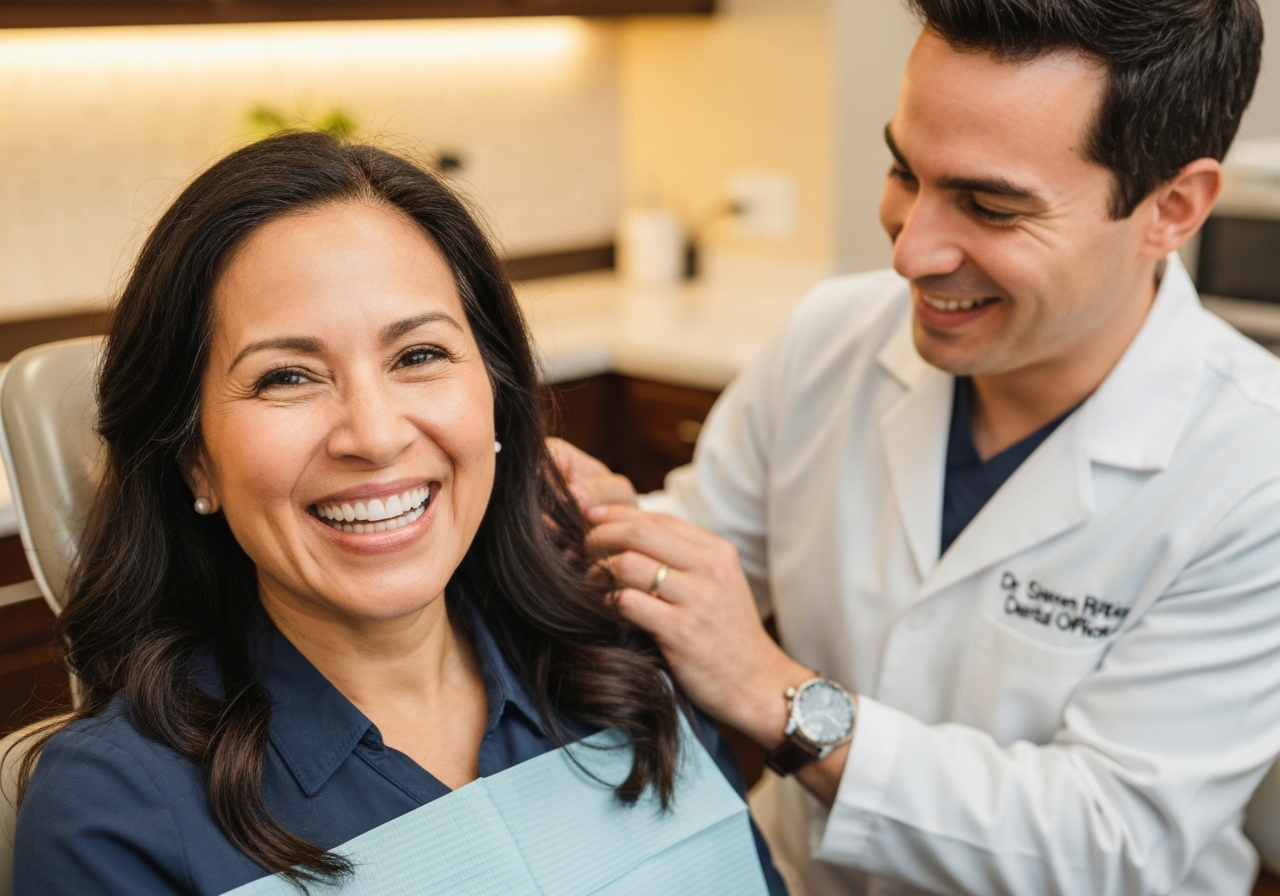
When you find out you are expecting, your world changes overnight. Suddenly, every decision feels heavy. You are checking ingredients on skincare bottles, cutting out sushi, and reading every parenting book you can get your hands on. Naturally, you become hyper-aware of your health. One question I hear constantly at our practice is about the safety of visiting the dentist during this special time.
Specifically, there is a lot of fear surrounding X-rays. It makes sense why you would be worried. We have been conditioned to associate radiation with danger. However, as your partners in health at Dental Care of Beverly Hills, we want to replace that fear with facts. Your oral health is actually a critical part of a healthy pregnancy.
Today, I want to walk you through everything you need to know about dental X-rays, safety protocols, and why taking care of your teeth right now is one of the best things you can do for your growing baby.
The Connection Between Oral Health and Pregnancy
Before we dive into the technical aspects of X-rays, it is important to understand why you are in the dental chair in the first place. Many expectant mothers feel that they should skip their dental appointments until after the baby is born. They think they are playing it safe. However, the opposite is often true.
During pregnancy, your hormone levels rise significantly. Progesterone and estrogen levels surge, which increases blood flow to all parts of your body, including your gums. This can make your gum tissue more sensitive and susceptible to plaque and bacteria. This condition is so common it has a name: pregnancy gingivitis.
If left untreated, gingivitis can progress to periodontal disease (gum infection). This is where the concern lies. Research suggests a link between severe gum disease and adverse pregnancy outcomes, such as preterm birth and low birth weight. By maintaining your dental appointments, you are actively lowering these risks.
Addressing the Elephant in the Room: Are X-Rays Safe?
Let’s answer the big question directly. Yes, dental X-rays are considered safe during pregnancy when necessary precautions are taken. This isn’t just my opinion; it is the consensus of major medical organizations.
The American Dental Association (ADA) and the American College of Obstetricians and Gynecologists (ACOG) agree that dental X-rays can be performed during pregnancy. The key is understanding diagnostic necessity and the technology we use.
Understanding Radiation Levels
The word “radiation” sounds scary, but we are exposed to background radiation every single day. You get it from the sun, the soil, and even the food you eat (like bananas). The amount of radiation used in a modern dental X-ray is extremely low.
To put this into perspective, let’s look at a data point. According to the American College of Radiology, a single dental X-ray exposes you to roughly 0.005 millisieverts of radiation. In comparison, simply living your daily life exposes you to about 3.0 millisieverts per year from natural sources. You would get more radiation exposure taking a cross-country airplane flight than you would from a routine set of dental X-rays.
Furthermore, dental X-rays are focused. We are taking images of your teeth, not your abdomen. The beam is highly targeted, meaning the scatter radiation—the radiation that bounces off—is virtually non-existent near the uterus.
Our Safety Protocols: How We Protect You
Even though the risk is negligible, we believe in “ALARA.” This stands for “As Low As Reasonably Achievable.” We never take X-rays just for the sake of it, especially when you are pregnant. We only take them if they are essential for diagnosis and treatment. When we do, we use multiple layers of protection to ensure you and your baby are safe.
- Leaded Aprons: We place a heavy, leaded apron over your torso. Lead is dense and effectively blocks radiation. This apron covers your abdomen completely, acting as a shield for the baby.
- Thyroid Collars: We also use a thyroid collar around your neck. Your thyroid is a gland that helps regulate your hormones, which is vital during pregnancy. This collar protects it from any potential exposure.
- High-Speed Digital Sensors: At Dental Care of Beverly Hills, we use modern digital radiography. Digital sensors are much more sensitive than old-school film. This means we require significantly less radiation to capture a clear image. It makes the process faster and safer.
Navigating Dental Work While Pregnant
Once we have taken the necessary X-rays and identified an issue, the next step is treatment. Many patients ask us about the timeline for dental work while pregnant. Is there a “safe” trimester? Is there a time we should avoid?
The consensus in the medical community is that necessary dental treatment is safe at any stage of pregnancy. However, from a comfort and practicality standpoint, we often strategize the timing of non-emergency procedures.
The First Trimester
During the first 12 weeks, the baby’s major organs are forming. While X-rays and exams are safe, this is also the time when many women experience morning sickness and fatigue. If you have elective treatment (like cosmetic work) or non-urgent fillings, we might suggest waiting simply so you don’t have to deal with dental instruments in your mouth while you feel nauseous. However, if you have an infection or pain, we treat it immediately. An infection in your body is a much higher risk to the baby than the treatment is.
The Second Trimester
This is often called the “sweet spot” for dental work while pregnant. By weeks 14 to 20, the nausea usually subsides, and your baby bump isn’t yet big enough to make lying in the dental chair uncomfortable. If you need cavities filled, crowns, or root canals, this is the ideal time to get them done. We want to clear up any infections before you enter the later stages of pregnancy.
The Third Trimester
Once you reach the third trimester, lying flat on your back for an extended period can be difficult. It can put pressure on a major blood vessel called the vena cava, which might make you feel faint. While it is still safe to perform procedures, we usually keep appointments short. We might ask you to bring a pillow or allow you to shift positions frequently to stay comfortable.
Anesthetics and Medications
Another layer of anxiety involves numbing shots. If we need to fill a cavity that we found on your X-ray, we need to use local anesthesia. Is that safe?
Yes. The most common anesthetic used is Lidocaine. It is classified as Category B by the FDA, which means animal reproduction studies have failed to demonstrate a risk to the fetus. Lidocaine does not cross the placenta in the same way other drugs might. We make sure you are comfortable and pain-free because stress and pain can elevate your blood pressure, which is not good for the baby.
If you require antibiotics for an infection, there are several options, such as penicillin and amoxicillin, that are deemed safe for use during pregnancy. We always review your full medical history and can consult with your OB-GYN if there are any specific concerns regarding allergies or high-risk conditions.
Common Pregnancy Dental Woes
We rely on X-rays to see beneath the surface, but there are several conditions we look for visually during your pregnancy check-ups. Being aware of these can help you monitor your own health at home.
Pregnancy Tumors
The name sounds terrifying, but these are actually benign (non-cancerous) overgrowths of tissue that appear on the gums. They look like red, raw swellings between the teeth. They are caused by excess plaque and hormonal changes. They usually bleed easily and can be annoying, but they typically vanish on their own after the baby is born. If they become painful or interfere with eating, we can remove them safely.
Enamel Erosion
Morning sickness is tough on your body, and it is tough on your teeth. Frequent vomiting exposes your teeth to strong stomach acids. Over time, this acid can erode the enamel on the back of your teeth, leading to sensitivity and decay.
Pro Tip: If you suffer from morning sickness, do not brush your teeth immediately after vomiting. Your enamel is soft from the acid, and brushing can scratch it away. Instead, rinse your mouth with a mixture of a teaspoon of baking soda and water. This neutralizes the acid. Wait about an hour before brushing.
The Risk of Avoiding Care
I cannot stress this enough: ignoring dental pain is dangerous. A small cavity can turn into a root canal issue or a dental abscess very quickly due to the body’s changing chemistry. An abscess is a serious infection that can spread to other parts of the body.
Here is a significant data point to consider: According to a study published in the Journal of the American Dental Association, nearly 50% of pregnant women have some form of gingivitis. Despite this high prevalence, many women skip their dental visits due to misconceptions about safety. By skipping visits, you allow this inflammation to persist, which puts systemic stress on your body.
We encourage you to view your dentist as part of your prenatal care team. Just as you see your doctor for ultrasounds to check the baby’s growth, you see us to ensure no infections are compromising your health.
Holistic Advice for a Healthy Pregnancy Smile
Beyond the dental chair, there is a lot you can do to keep your smile bright and your baby safe. Here is what we recommend to our patients in Beverly Hills:
Update Your Routine
You might be tired, but don’t skip the floss. With your gums being more prone to inflammation, flossing is your first line of defense. Use a soft-bristled toothbrush to avoid irritating sensitive tissues. If you are struggling with a gag reflex, try using a smaller toothbrush head, like a toddler’s brush, to reach the back teeth without triggering nausea.
Watch the Cravings
We know the pickles and ice cream cravings are real. However, frequent snacking increases the amount of time your teeth are under acid attack. If you crave sugary snacks, try to eat them with a meal rather than grazing throughout the day. Drinking plenty of water helps wash away food particles and keeps your saliva production high, which naturally protects teeth.
Get Your Calcium
Your baby needs calcium to build strong bones. If your diet is lacking, your body will prioritize the baby, potentially leaching minerals from your own bones (though not directly from your teeth, as per common myth, but your overall bone density matters). Ensure you are eating plenty of leafy greens, dairy, or fortified alternatives.
Empowering You With Knowledge
It is completely normal to feel protective and cautious right now. We honor that instinct. Our goal is never to pressure you, but to empower you. When you understand that modern digital X-rays emit negligible radiation and that untreated infection poses a greater risk, you can make informed decisions.
We also coordinate care. If you have a high-risk pregnancy or specific medical conditions, we are more than happy to pick up the phone and speak with your obstetrician. We often work together to determine the best timing and approach for your treatment plan. You are never navigating this alone.
For more detailed information on the official guidelines regarding dental care during pregnancy, you can read the committee opinion from the American College of Obstetricians and Gynecologists (ACOG). It serves as a great resource for understanding the medical consensus on oral health.
Looking Forward to Your Visit
Pregnancy is a journey filled with preparation. You are preparing the nursery, preparing your home, and preparing your heart. Let’s make sure we prepare your smile, too. A healthy mouth contributes to a healthy pregnancy, giving your baby the best possible start in life.
If you have been putting off a dental visit because of worries about X-rays or “dental work while pregnant,” I hope this has put your mind at ease. We have the technology, the training, and the gentle touch to keep you safe. At Dental Care of Beverly Hills, we treat you like family, ensuring both you and your little one are in the best of hands.
Don’t wait for a toothache to strike. Let’s focus on prevention so you can focus on the joy of what comes next.