When most people hear the word “Botox,” their minds immediately jump to plastic surgery offices, red carpets, and the quest to erase crow’s feet or forehead lines. Living and working here in Beverly Hills, we certainly understand the appeal of maintaining a youthful appearance. However, as dental professionals, we look at Botox through a slightly different lens.
For us, this treatment isn’t just about smooth skin; it is a powerful therapeutic tool that can relieve pain, protect your teeth, and improve your quality of life. At Dental Care of Beverly Hills, we believe in using every tool available to ensure our patients have healthy, functional, and beautiful smiles. You might be surprised to learn that one of the most effective tools for treating jaw pain and facial tension is actually Botox.
If you have been waking up with a sore jaw, suffering from chronic headaches, or feeling self-conscious about a “gummy” smile, this post is for you. We want to pull back the curtain on how we use this injectable to treat more than just wrinkles.
Why Is a Dentist Administering Botox?
This is a question we hear quite often. “Why should I get Botox from my dentist instead of a dermatologist or a med-spa?” The answer lies in our training. As dentists, our entire education is focused on the maxillofacial areas—that means the face, the jaw, and the neck.
We spend years studying the intricate muscles of the face and how they interact with your bone structure. We give injections in the mouth and face every single day. In fact, dentists are arguably the most experienced professionals when it comes to facial injections because we understand the cranial nerves and muscle dynamics better than almost anyone else.
When you visit us, you are in the hands of someone who understands not just the skin, but the deep underlying structures that define your smile and jaw function. We treat the root cause of muscle tension, ensuring that your treatment is both safe and highly effective.
Understanding Temporomandibular Joint Disorder (TMD)
One of the primary reasons we introduce patients to therapeutic injections is to combat the pain associated with the Temporomandibular Joint (TMJ). This is the hinge that connects your jaw to the temporal bones of your skull. It lets you move your jaw up and down and side to side, so you can talk, chew, and yawn.
When this joint gets overworked or displaced, it leads to a condition called TMD (Temporomandibular Disorder). The symptoms can be debilitating:
- Clicking or popping sounds in the jaw
- Severe pain in the face, jaw joint area, neck, and shoulders
- Lockjaw (inability to open the mouth wide)
- Chronic headaches or earaches
According to the National Institute of Dental and Craniofacial Research, estimates suggest that over 10 million Americans are affected by TMJ problems. That is a massive number of people living in pain, many of whom don’t realize that relief is available right in the dental chair.
Using Botox for TMJ Relief
This is where the magic happens. Using botox for tmj is a game-changer for our patients who have tried mouthguards and stress relief techniques but still suffer from pain. When we inject Botox into the specific muscles responsible for moving the jaw—specifically the masseter and temporalis muscles—it acts as a muscle relaxant.
Botox works by blocking the nerve signals to these muscles. When the muscles can’t contract as forcefully, they are forced to relax. This doesn’t mean you won’t be able to chew or speak; it simply reduces the intensity of the muscle contractions. This relaxation gives the inflamed TMJ a chance to rest and heal.
The relief is often profound. Many of our patients report a significant decrease in daily pain and fewer tension headaches. It turns down the “volume” on your jaw muscles, stopping the cycle of spasms and pain.
Combating Bruxism (Teeth Grinding)
Closely related to TMJ issues is bruxism, or the grinding and clenching of teeth. Many people do this in their sleep without even realizing it until they wake up with a sore face or sensitive teeth. Over time, this habit can destroy your dental work, wear down your enamel, and even cause teeth to crack.
While we often prescribe night guards to protect the teeth, a night guard doesn’t stop the muscle action; it just puts a barrier between the teeth. The muscles are still firing and creating tension. By using Botox, we can weaken the force of that clenching. You can still chew your food normally, but the involuntary grinding during sleep is significantly reduced.
This not only saves your teeth from wear and tear but also can slim the face. When the masseter muscle (the big chewing muscle on the side of the jaw) is overworked from grinding, it can bulk up, making the face look wider or “square.” Relaxing this muscle can eventually lead to a softer, more aesthetically pleasing facial profile.
Fixing the “Gummy Smile”
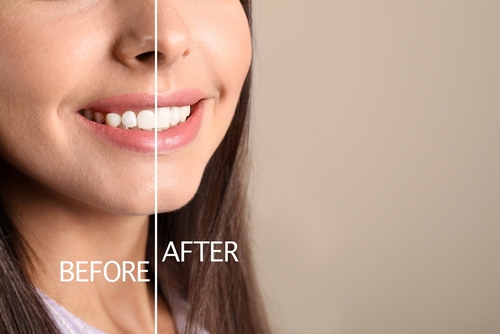
Beyond pain relief, we also use Botox for aesthetic dental reasons that have nothing to do with wrinkles. One of the most common requests we get is for correcting a high lip line, often called a “gummy smile.”
A gummy smile occurs when the hyperactive muscles in the upper lip pull the lip up too high when you smile, exposing a large amount of gum tissue above the top teeth. Historically, fixing this required surgery to remove gum tissue or lower the jaw.
Now, we can treat this non-surgically. By placing a small amount of Botox in the levator labii superioris alaeque nasi (the muscle that lifts the upper lip), we can relax that muscle just enough. The lip won’t raise as high, covering the gums and showcasing your beautiful teeth instead. It is a subtle change that makes a massive difference in our patients’ confidence.
Treating Chronic Migraines
Did you know that many migraines originate from dental stress? The tension in the jaw and neck can trigger severe headaches that radiate up the side of the head. Because we understand the trigger points in the facial muscles, we can strategically administer Botox to prevent the onset of these headaches.
Data indicates that for chronic migraine sufferers, Botox treatments can cut the number of headache days in half. That is not just a medical statistic; that is getting your life back. If you are constantly popping painkillers to deal with tension headaches, discussing this option with us during your next cleaning could change your daily routine for the better.
The Procedure: What to Expect
We know that the idea of injections can make some people nervous. However, the process is incredibly quick and minimally invasive. Here is what typically happens when you come to Dental Care of Beverly Hills for this treatment:
1. Consultation
First, we sit down and talk. We assess your jaw function, look at your teeth for signs of grinding, and discuss your aesthetic goals. We need to make sure you are a good candidate.
2. The Injection
The actual procedure takes about 10 to 15 minutes. We use a very fine needle, so the discomfort is minimal—often described as a little pinch or a bug bite. Because we are experts in facial anatomy, we know exactly where to place the injection to maximize relief and avoid unnatural looking results.
3. No Downtime
You can go right back to work or your daily routine immediately after leaving our office. We usually advise you not to rub the area or lie down flat for a few hours, but otherwise, there are very few restrictions.
Results and Longevity
It is important to manage expectations regarding timing. You won’t feel the effects the second you leave the chair. It typically takes about 3 to 7 days for the Botox to bind to the nerve receptors and for the muscles to begin relaxing. The full effect is usually felt around the two-week mark.
The results generally last between 3 to 4 months. As the Botox wears off, muscle function gradually returns. However, with regular treatments, many of our patients find that their muscles “learn” to relax, and they may need less frequent injections over time. Specifically, regarding botox for tmj, breaking the cycle of pain often provides relief that lasts quite a while.
Integrating Botox into Your Dental Plan
We view Botox as an adjunct therapy. It works best when combined with comprehensive dental care. For example, if you have missing teeth that are causing your bite to be uneven, fixing the bite with implants or bridges is the primary solution. Botox would then be the secondary solution to manage the muscle pain caused by the bad bite.
We always look at the big picture. We aren’t just treating a symptom; we are looking at your overall oral health system. For more information on the medical applications of these treatments, you can read further on the Mayo Clinic’s overview of Botox procedures.
Safety and Side Effects
Botox is FDA-approved for various medical uses and has a long track record of safety. However, like any medical procedure, there are potential side effects. These can include mild bruising at the injection site, temporary weakness in nearby muscles, or a headache immediately following treatment.
Because we operate in a sterile, clinical environment and possess advanced knowledge of facial nerves, the risk of complications is significantly lower than receiving treatment in a non-medical setting. Your safety is our top priority.
Is This Right For You?
Deciding to use Botox for dental issues is a personal choice, but it is one that has brought relief to countless patients in our practice. If you answer “yes” to any of the following, it might be time to have a conversation with us:
- Do you wake up with a stiff jaw or headache?
- Have you noticed your teeth looking shorter or flatter (signs of grinding)?
- Do you feel your smile shows too much gum tissue?
- Does your jaw click or pop when you eat?
- Are you looking for a non-surgical way to slim a square jawline?
Your Smile is Our Priority
At Dental Care of Beverly Hills, we are dedicated to keeping you smiling comfortably and confidently. We have embraced the evolution of modern dentistry, which includes using advanced therapies like Botox to treat functional and aesthetic issues simultaneously.
It is time to stop thinking of Botox solely as a wrinkle eraser and start seeing it as the muscle-relaxing, pain-relieving therapeutic tool that it is. Whether you are battling the intense pain of TMJ or just want to refine your smile line, we have the expertise to help.
We invite you to schedule a consultation with us. Let’s discuss how we can alleviate your pain and enhance your natural beauty. You deserve to live pain-free and love the smile you see in the mirror every day.