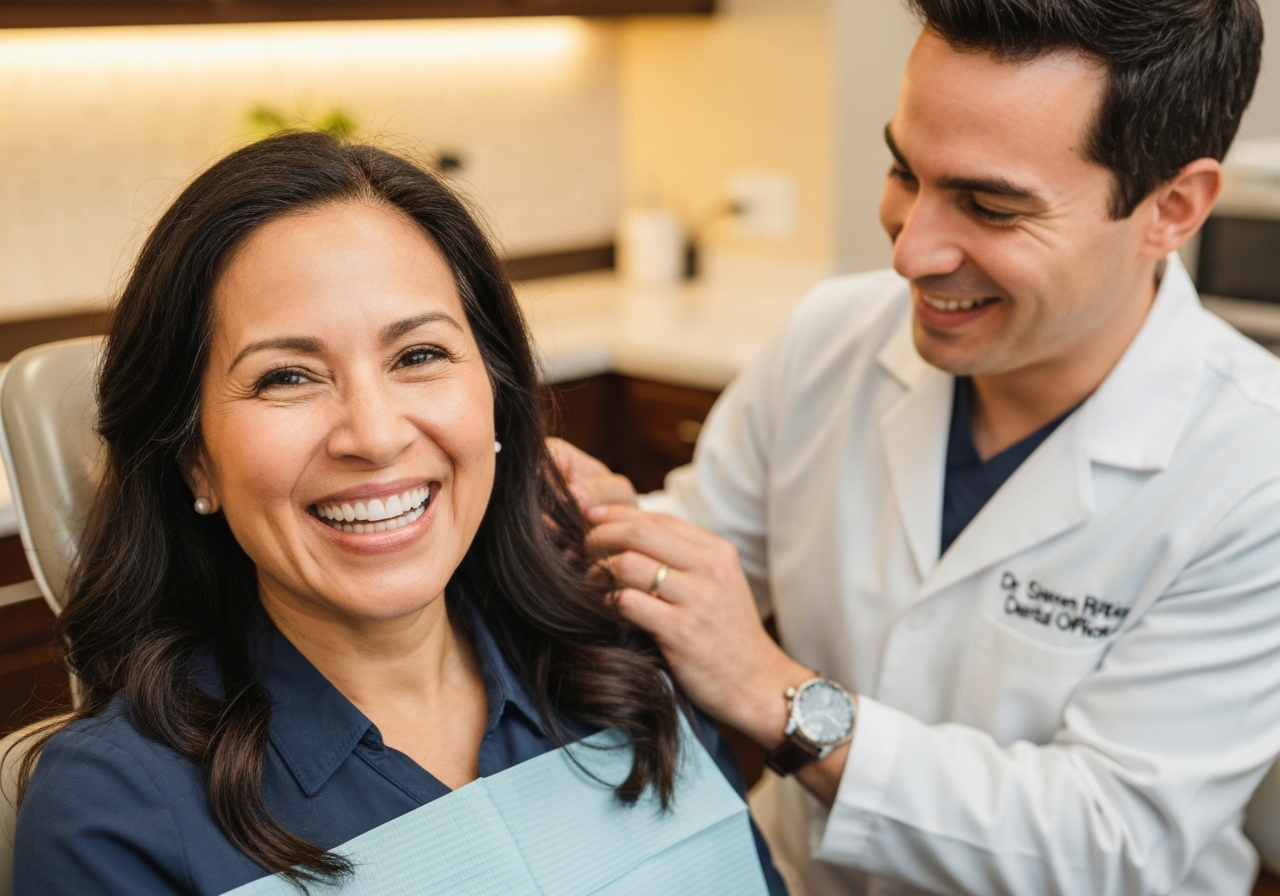
When you walk into Dental Care of Beverly Hills, you expect a level of service that matches the prestige of our location. We pride ourselves on offering not just a beautiful environment, but also the most advanced technology available in modern dentistry. For a long time, visiting the dentist meant dealing with uncomfortable, sharp pieces of film in your mouth and waiting around for them to develop in a darkroom. But times have changed, and so have we.
One of the most significant upgrades we have implemented is the shift to digital dental x-rays. If you haven’t experienced this technology yet, it is a total game-changer for your comfort, your safety, and the quality of care we can provide. I want to walk you through exactly why we made this switch and how it directly benefits your smile.
Understanding the Shift in Dental Imaging
To really appreciate the benefits, we have to look at where we came from. Traditional X-rays served us well for decades. They allowed dentists to see beneath the gum line and inside the tooth structure. However, they came with limitations. They required chemical processing, higher radiation doses, and a fair amount of waiting time.
Digital radiography has completely revolutionized this process. Instead of film, we use a tiny digital sensor. This sensor captures the image and immediately sends it to a computer screen right in front of you. There is no waiting for chemicals to do their work. It is instant, clean, and incredibly precise. As a practice committed to excellence, adopting digital dental x-rays was an easy decision because it aligns perfectly with our philosophy of putting the patient first.
Your Safety is Our Priority: Significantly Reduced Radiation
The most common question I get from patients regarding X-rays concerns safety. “Is it safe?” and “How much radiation am I getting?” are valid questions. We all want to limit our exposure to radiation in our daily lives. This is perhaps the most critical benefit of going digital.
Digital X-rays require a significantly lower dose of radiation to capture a high-quality image compared to traditional film. Because the digital sensors are much more sensitive to X-rays than film is, we can dial down the exposure time drastically.
Data Point: Radiation Reduction
According to research in the field of radiology, digital dental x-rays reduce radiation exposure by up to 90% compared to traditional film radiography. This massive reduction means that the safety profile of getting your check-up scans is better than it has ever been. For patients who need frequent imaging due to complex dental issues, this peace of mind is invaluable.
While traditional methods were considered safe, we believe that if there is a way to make a procedure even safer, we should take it. We follow the ALARA principle (As Low As Reasonably Achievable), and digital sensors are the best tool we have to uphold that standard.
Enhanced Diagnostic Capabilities
From my perspective as a dental professional, the clarity of the image is everything. With old film X-rays, the image was small. If I wanted to see a tiny fracture or the beginning of a cavity between two teeth, I had to hold the film up to a light box and perhaps use a magnifying glass. Even then, the image was static; I couldn’t change it.
With digital dental x-rays, the image pops up on a large high-definition monitor. This allows us to do things that were impossible with film:
- Zooming In: I can enlarge specific areas of the tooth to see tiny details that might be missed on film.
- Contrast Adjustment: We can change the brightness and contrast to better distinguish between healthy tooth structure and decay.
- Color Coding: We can sometimes apply color filters to highlight different densities in the bone or tooth.
This level of detail helps us catch problems when they are small. Treating a tiny cavity is much easier, less invasive, and more affordable than treating a large one that went unnoticed because of grainy film images. Early detection is the key to preserving your natural teeth for a lifetime.
Co-Diagnosis: You See What We See
One of my favorite things about digital imaging is how it improves communication between us. In the past, I would look at a small film and tell you, “You have a cavity here.” You had to take my word for it because you couldn’t really interpret the blurry gray smudge on the film.
Now, I can pull the image up on a screen right next to your chair. I can point to the screen and show you exactly what is happening. We can look at the “before” and “after” images together. This process is called co-diagnosis. It empowers you to make educated decisions about your oral health.
When you can clearly see the shadow indicating decay or the bone loss around a root, you understand why a treatment is necessary. It removes the mystery and builds trust. We are a team working on your health, and you deserve to have all the visual information that I have.
Superior Comfort and Speed
Let’s be honest: nobody liked the “bitewings” of the past. Those cardboard or plastic tabs often had sharp edges that dug into the roof of your mouth or your gums. Holding them in place while the dentist ran out of the room to press the button felt like it took forever.
Digital sensors are generally more ergonomic. They have rounded corners and are designed to fit more comfortably in the mouth. Furthermore, because the sensor is so sensitive, the time it takes to capture the image is a fraction of a second. This reduces the time you have to hold an uncomfortable position.
Data Point: Time Efficiency
Beyond the capture speed, the processing speed is a major benefit. Traditional film development could take anywhere from 5 to 10 minutes per set of X-rays. With digital technology, the image appears on the screen in less than 5 seconds. This efficiency cuts down your total chair time, meaning you get back to your busy life in Beverly Hills much faster.
Greener Dentistry for a Better Environment
At Dental Care of Beverly Hills, we care about our community and our planet. Traditional radiography is not very eco-friendly. It relies on toxic chemicals (fixers and developers) to process the film. These chemicals have to be disposed of carefully to avoid contaminating the water supply. Additionally, the lead foils inside the film packets create physical waste.
Digital dental x-rays eliminate the need for these chemicals entirely. There is no film to throw away, no lead foil wrappers, and no chemical waste management required. By choosing digital, we are significantly reducing our carbon footprint. It is a cleaner, “greener” way to practice dentistry, which is something we feel very good about.
Easier Storage and Transferring of Records
Have you ever moved to a new city or needed to see a specialist, only to find that your physical X-ray films were lost? Or perhaps you had to physically drive to the office to pick them up? Physical films degrade over time; they can get scratched, lost, or fade.
Digital images are stored securely in your electronic health record. They don’t fade, and they don’t get lost. If we need to refer you to an orthodontist or an oral surgeon, we can email your high-quality digital X-rays instantly (via secure, encrypted channels). This ensures the specialist has the information they need before you even walk through their door. It makes coordinating your care seamless and hassle-free.
Furthermore, digital storage allows us to keep a perfect history of your dental health. We can overlay an image from five years ago with an image from today to track subtle changes in your bone levels or tooth movement. This long-term tracking is essential for proactive dental care.
Cost-Efficiency in the Long Run
While the initial investment in digital technology is higher for a dental practice, it eventually helps control costs for patients. Because the process is faster, we can see patients more efficiently. Because we catch problems earlier thanks to better image quality, your treatments are often less complex and less expensive.
For example, catching a spot of decay when it is just in the enamel might only require a small filling (or sometimes just fluoride therapy and watching). If that decay is missed on a traditional X-ray and grows into the nerve, you might end up needing a root canal and a crown. The difference in cost between a small filling and a root canal is substantial. Digital diagnostics help us keep your dental costs down by prioritizing prevention and early intervention.
Addressing Common Concerns
I understand that technology can sometimes feel overwhelming, or you might be nostalgic for the way things used to be. However, in medicine, stagnation is not an option. We adopt these technologies not because they are “trendy,” but because they provide superior clinical results.
Some patients ask if the digital sensors are hygienic since they are reused. Absolutely. We use medical-grade, disposable barrier sheaths for every single patient. The sensor never directly touches your mouth. This ensures strictly sterile conditions, adhering to the highest standards of infection control.
For more information on the safety and regulations regarding dental radiography, you can visit the American Dental Association’s MouthHealthy page on X-rays. It is a fantastic resource that reinforces the safety protocols we follow.
The Dental Care of Beverly Hills Difference
When you choose us for your dental care, you are choosing a team that refuses to compromise on quality. We invest in digital dental x-rays because we believe you deserve the best. We want your visit to be as safe, quick, and comfortable as possible.
We combine this high-tech approach with a high-touch philosophy. Technology is a tool, but it doesn’t replace the human connection. We use these digital images to sit down with you, talk to you like a friend, and plan your smile makeover or health maintenance together.
Summary of Benefits
To recap, here is why we love this technology and why our patients prefer it:
- Safety: Up to 90% less radiation.
- Speed: Instant images mean less time in the chair.
- Comfort: Ergonomic sensors fit better in the mouth.
- Quality: High-definition zooming and contrast aids early detection.
- Education: You see what we see on the big screen.
- Environment: No toxic chemicals or lead waste.
Experience the Future of Dentistry Today
If you have been putting off your dental check-up because you dread the discomfort of X-rays or worry about radiation, it is time to experience the digital difference. We have transformed the diagnostic process into something fast, easy, and fascinating to watch.
Your smile is your greatest asset. It deserves the most precise care available. By utilizing digital dental x-rays, we ensure that nothing is missed and that your treatment plan is based on the most accurate data possible. We invite you to come in, relax in our comfortable chairs, and let us show you the incredible technology that helps us keep Beverly Hills smiling.
Contact Dental Care of Beverly Hills today to schedule your appointment. Let’s take a look at your smile together in high definition.